
Understanding Small Business Health Insurance Plans: What Texas Business Owners Need to Know
Estimated Reading Time: 5 minutes
- Understand the importance of small business health insurance.
- Know the eligibility criteria for small business health insurance in Texas.
- Explore the different types of small business health insurance plans.
- Learn about employer contribution options and tax benefits.
- Utilize resources to help navigate insurance choices.
Table of Contents
- What is a Small Business Health Insurance Plan?
- Who Qualifies for Small Business Health Insurance?
- Types of Small Business Health Insurance Plans
- Employer Contribution Options
- Tax Advantages of Providing Small Business Health Insurance
- Practical Takeaways for Texas Business Owners
- Why Work with a Local Insurance Broker?
- Get Started Today!
What is a Small Business Health Insurance Plan?
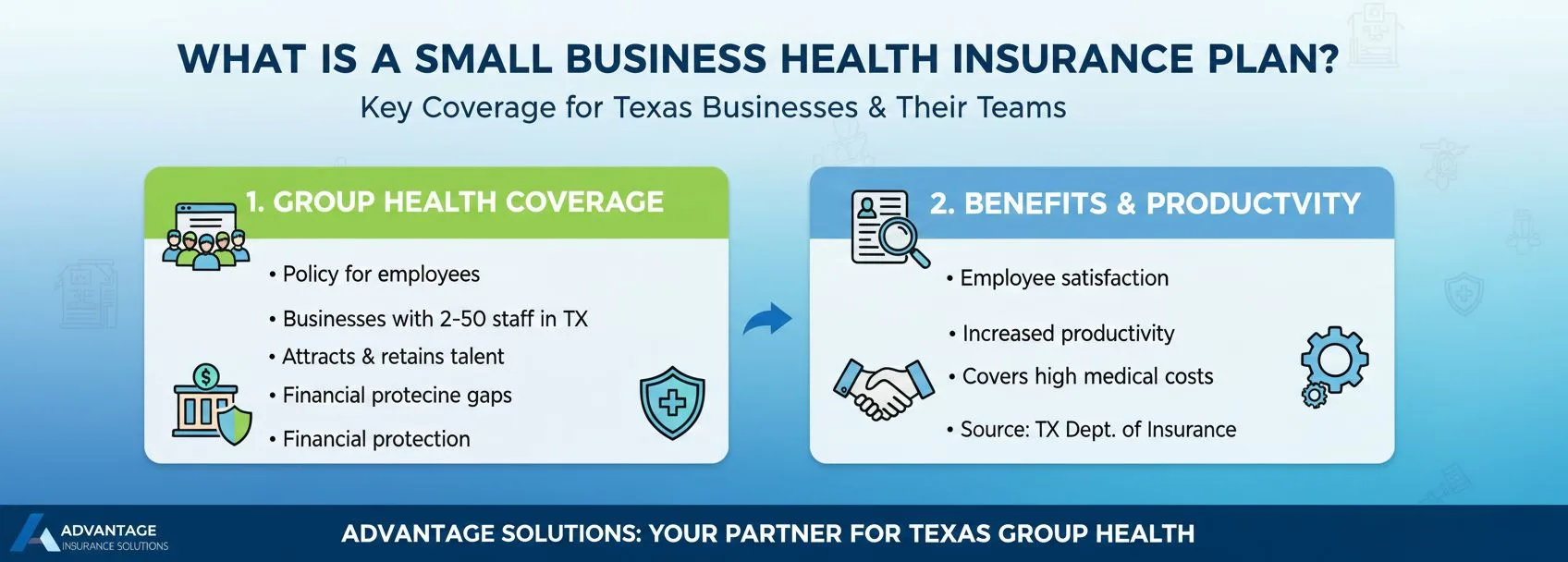
A small business health insurance plan is a group health insurance policy that offers coverage to employees at small businesses. In Texas, businesses with two to 50 full-time equivalent employees qualify as small businesses. These plans are crucial for attracting and retaining talent, as they provide employees with financial protection against high medical expenses.
According to the Texas Department of Insurance, small business owners in Texas are encouraged to offer health insurance for small businesses as it can lead to better employee satisfaction and increased productivity.
Who Qualifies for Small Business Health Insurance?
To qualify for small business health insurance plans in Texas, businesses must meet specific guidelines established by the Affordable Care Act (ACA). Primarily, the list of eligibility criteria includes:
- Business Size: The company must have between two and 50 full-time employees.
- Location: The business must operate in Texas, adhering to state laws and regulations governing insurance.
- Consistent Employment: Typically, businesses should have at least 75% of their employees enrolled in the group health plan, emphasizing commitment to employee health coverage.
It is essential for Texas business owners to review these criteria and ensure they comply with all applicable regulations when exploring small business health options program.
Types of Small Business Health Insurance Plans
Understanding the different types of small business health insurance plans is crucial for Texas business owners looking to provide the best coverage for their employees. Here are some of the most common options available:
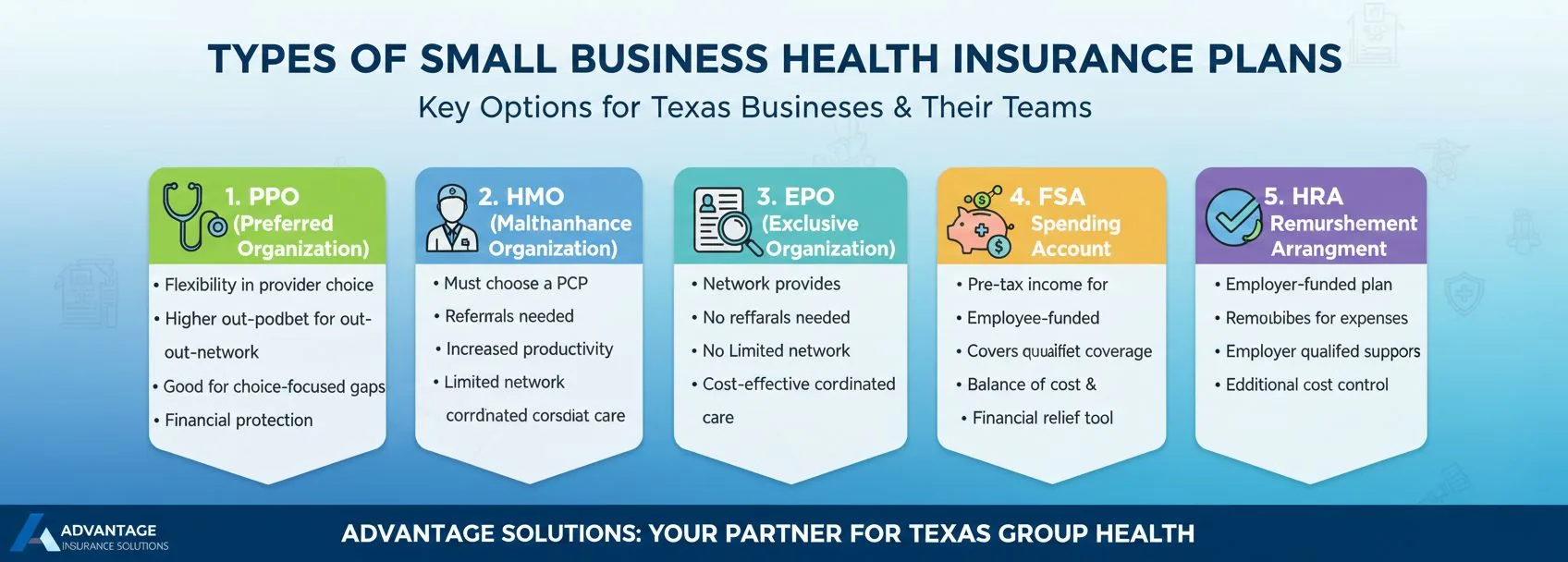
1. Preferred Provider Organization (PPO)
A PPO plan offers greater flexibility when choosing healthcare providers. It allows employees to visit any doctor or specialist, even without a referral. However, out-of-network visits generally come with higher out-of-pocket costs. This type of plan is suitable for businesses whose employees value choice and flexibility.
2. Health Maintenance Organization (HMO)
An HMO plan requires members to select a primary care physician (PCP) and obtain referrals for specialist visits. While HMO plans typically offer lower premiums, they limit coverage to a network of providers. This plan type is ideal for businesses looking to keep costs down while ensuring employees receive coordinated care.
3. Exclusive Provider Organization (EPO)
An EPO plan is somewhat of a hybrid between PPOs and HMOs. It provides a network of providers but does not require referrals. However, out-of-network services are generally not covered. This plan type offers lower premiums and is well-suited for businesses looking for a balance between cost and provider choice.
4. Flexible Spending Accounts (FSA)
While not an insurance plan per se, FSAs allow employees to set aside pre-tax income to pay for out-of-pocket health expenses. It’s an attractive option for businesses seeking to provide additional financial relief for healthcare costs.
5. Health Reimbursement Arrangements (HRA)
An HRA is an employer-funded plan that reimburses employees for qualified medical expenses. This option provides employees with additional financial support while helping businesses retain some control over costs.
Employer Contribution Options
One of the most significant advantages of small business health insurance plans is the ability to choose how much to contribute towards employee premiums. Here are some common employer contribution options:
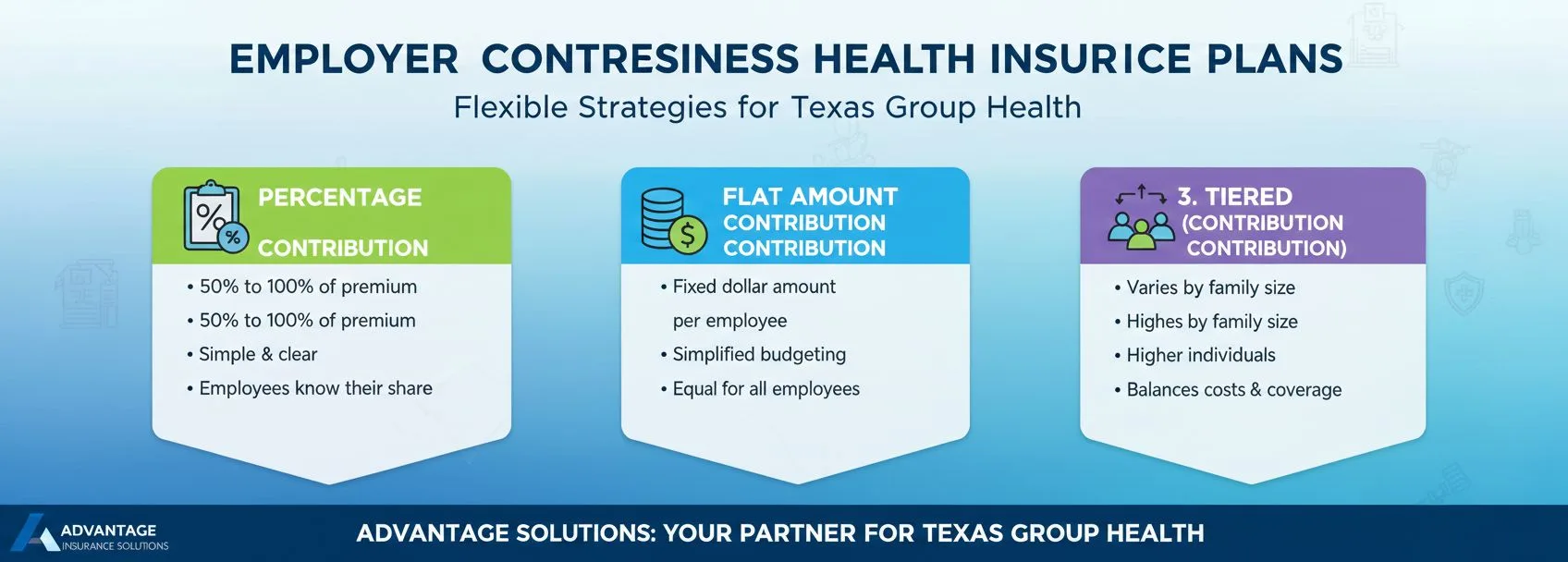
1. Percentage Contribution
Employers often select a percentage of the premium to contribute, typically between 50% to 100%. This approach is straightforward and helps employees understand their share of costs.
2. Flat Amount Contribution
Another strategy is a flat dollar amount contribution. Employers might choose to contribute a fixed amount towards each employee’s premium. This method simplifies budgeting and ensures all employees are treated equally.
3. Tiered Contribution
Employers can also adopt a tiered contribution strategy, paying different amounts based on family size. For instance, a business might cover a larger percentage for individuals than for families, helping balance costs while providing comprehensive coverage.
Tax Advantages of Providing Small Business Health Insurance
Providing health insurance to employees can lead to several tax benefits for Texas business owners. Here are some of the key tax advantages:
1. Business Tax Deductions
Premiums paid for employee health insurance can be written off as a business expense, reducing the overall tax liability for the business. This deduction applies to all types of health plans offered to employees.
2. Health Savings Accounts (HSAs)
If a business offers a high-deductible health plan (HDHP), it can also provide employees with access to HSAs, which are tax-advantaged accounts that employees can use to save for medical expenses. Contributions to HSAs are tax-deductible for both the employer and the employee.
3. Small Business Health Care Tax Credit
Certain small businesses may qualify for a health care tax credit, which can cover up to 50% of premiums paid for health insurance. This tax credit is particularly beneficial for businesses with low to moderate-income employees.
Practical Takeaways for Texas Business Owners
- Assess Your Needs: Analyze the health and wellness needs of your workforce to select the most suitable plan.
- Compare Plans: Gather several quotes to compare coverage, premiums, and out-of-pocket costs. Don’t hesitate to consult with a local insurance broker to help navigate your options.
- Communicate Clearly: Ensure employees are aware of their coverage options and the benefits available to them, helping them make informed decisions.
- Revisit Annually: Health insurance needs can change as your business grows. Make it a priority to review your offerings at least once a year.
- Take Advantage of Resources: Utilize local resources and connect with industry experts to stay informed about changes in regulations, as well as new offerings.
Why Work with a Local Insurance Broker?
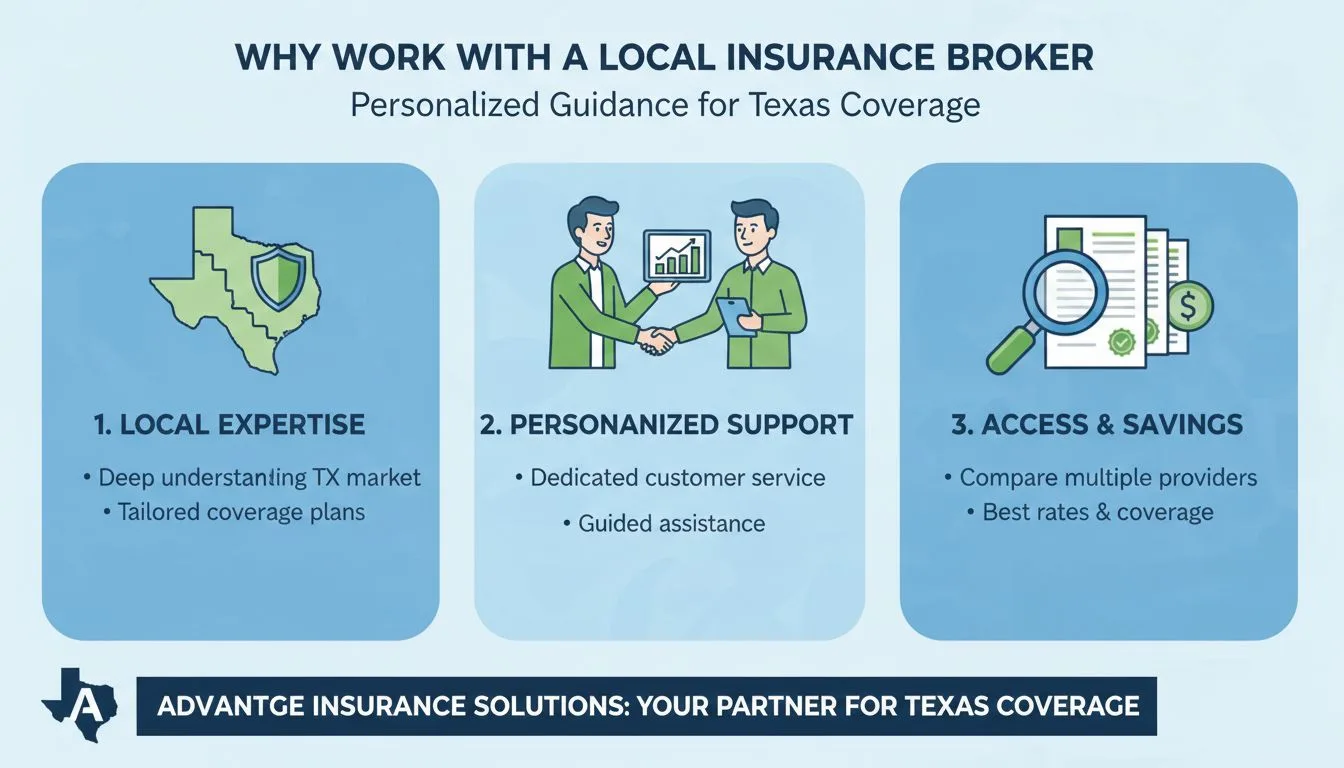
Partnering with a local insurance broker like Advantage Insurance Solutions provides several advantages. Our deep understanding of the Corpus Christi insurance landscape allows us to tailor coverage plans to fit the unique needs of Texas business owners. We offer personalized assistance and dedicated customer support, ensuring you are equipped with the best insurance solutions and guidance every step of the way.
Get Started Today!
Are you ready to explore small business health insurance plans that fit your needs and budget? Contact Advantage Insurance Solutions today for a free insurance quote! Our team is here to provide personalized guidance and help you navigate the complexities of health insurance, ensuring you find the best coverage for your team.
As Texas business owners, embracing small business health insurance is not only about compliance; it’s about investing in your greatest asset—your employees. Let Advantage Insurance Solutions assist you in securing the right coverage that protects your workforce and fosters success in your business endeavors. Reach out today!
Frequently Asked Questions
What are the eligibility requirements for small business health insurance in Texas?
Eligibility requirements include having between two and 50 full-time employees, operating in Texas, and having at least 75% of employees enrolled in the group health plan.
What types of plans are available for small businesses?
Common types of plans include PPOs, HMOs, EPOs, FSAs, and HRAs.
Can employers choose how much to contribute to employee premiums?
Yes, employers can select a percentage contribution, a flat dollar amount, or tiered contributions based on family size.
What tax benefits are available for providing health insurance?
Tax benefits may include business tax deductions for premiums paid, access to HSAs, and potential eligibility for the Small Business Health Care Tax Credit.